Destinations
eSIM for Indonesia: Bali, boats and the first day
Seventeen thousand islands, no roaming agreement with anywhere, and apps that run a live map all day. What to sort out before you fly.
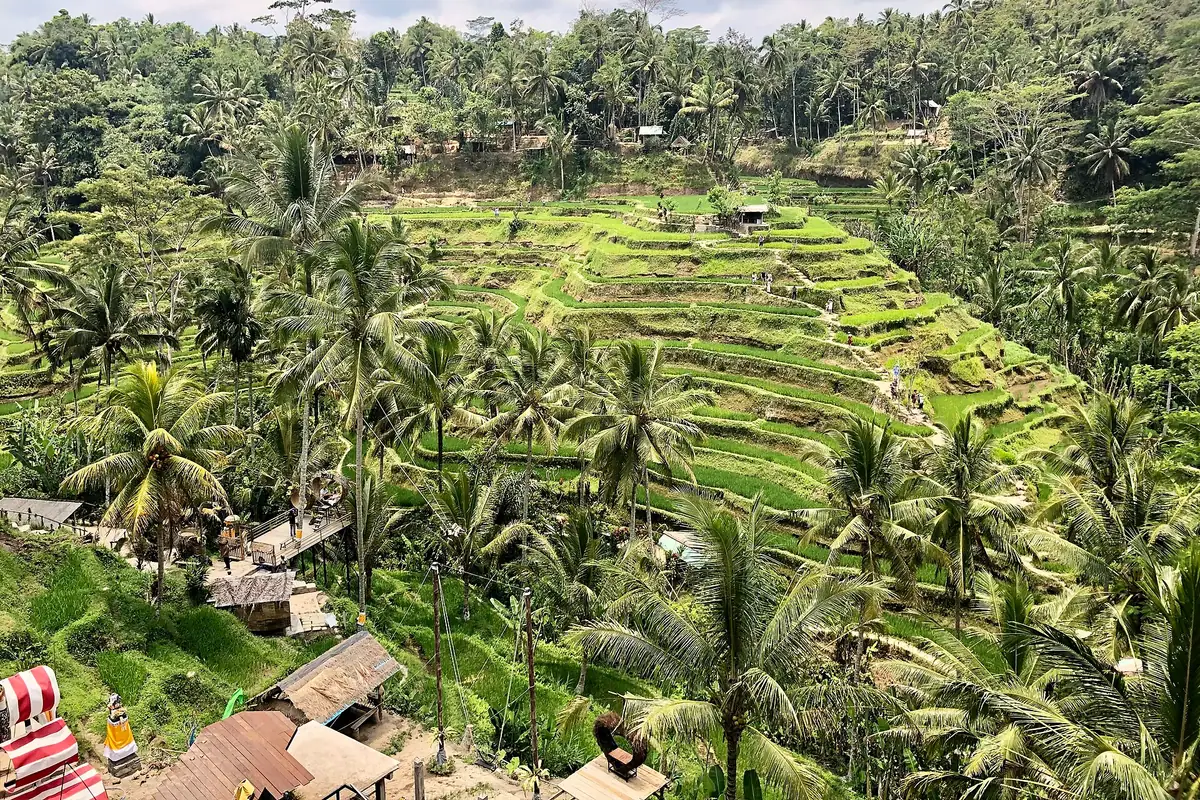
Photo: Pinterpandai, CC BY-SA 3.0
Indonesia is the furthest country in this series and the only one where an eSIM is not a convenience but arithmetic. On a European home plan, a week in Indonesia can cost more than somebody's flight.
It is also a country of seventeen thousand islands, so "coverage in Indonesia" means nothing until you say where you are actually going.
Which networks you get
Our plans use Telkomsel and Tri. Your phone takes the strongest and moves between them on its own.
On Bali, Java and in the larger cities coverage is good and fast — often better than people expect. On Bali you will have 4G in the rice terraces around Ubud. The difference appears the moment you leave that zone: Nusa Penida, the Gilis, Flores, the interiors of Sumatra and Kalimantan. There coverage varies network by network, and having more than one is the difference between a signal and none.
Where there genuinely is no signal
This is a country where it pays to know in advance:
- Fast boats to the Gilis and Nusa Penida. Open water, thirty to ninety minutes of nothing.
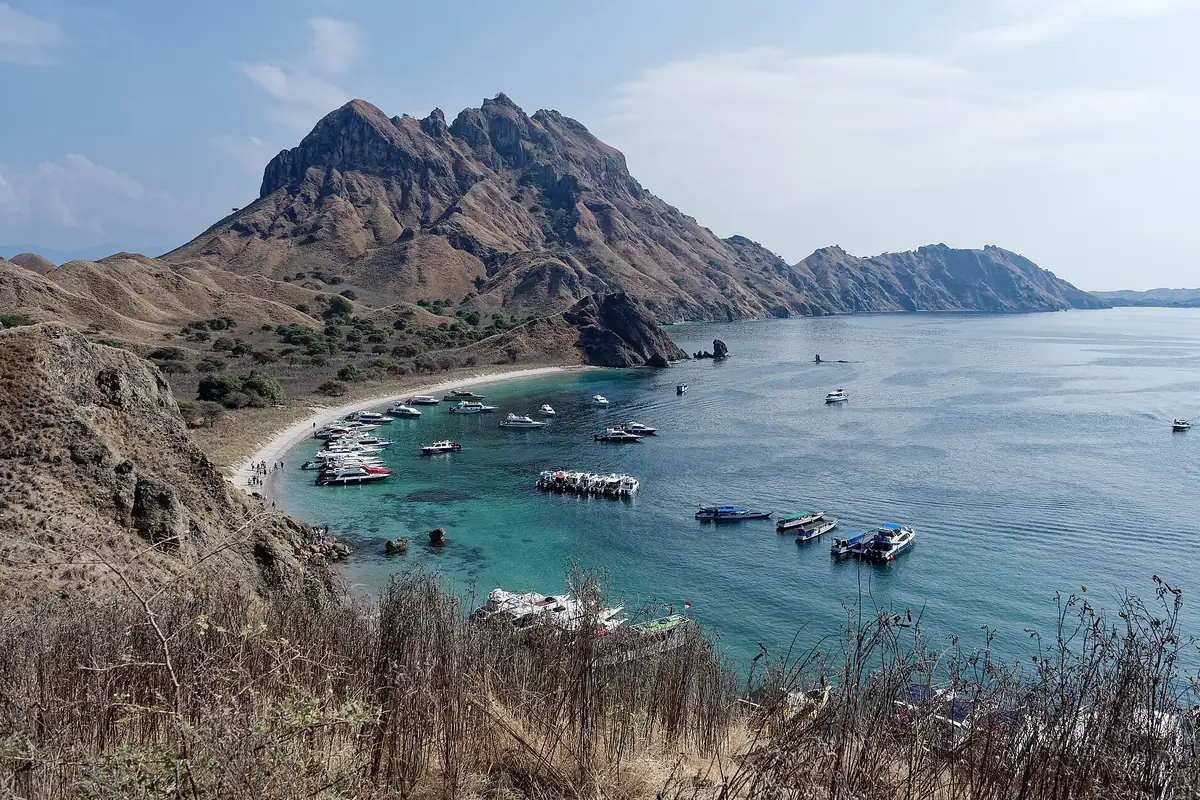
- Komodo and the Flores boat trips. Multi-day sailings are out of coverage most of the time, and that is partly the point.
- Climbing Rinjani or Bromo. Night start, mountain, nothing.
- The interior. Off the main roads, coverage follows settlements, and settlements are sparse.
Download an offline map of every island before you leave the previous one. On Bali there is signal to do it; on the boat to the Gilis there is not.
How much data
Two weeks around Bali and nearby — maps, messaging, transport, bookings, photos — is realistically 8 to 12 GB, more than a European week, for two reasons specific to Indonesia:
- Ride-hailing apps. Gojek and Grab are used for everything — rides, food, delivery — and they run constantly in the background with a live map. That is the biggest steady consumer on an Indonesian trip.
- Photos and video. This is a destination people film. Set backup to WiFi only before you leave, or the plan goes on syncing rather than on using.
If you are working from the trip — and Bali is full of people working from the trip — budget at least double and buy with headroom.

Why a local SIM is not the obvious answer
Indonesian SIM cards are registered against your passport, bought in a shop, and take time you do not have on your first day. The price is low, but between the airport, the queue and the registration, the first evening is gone.
An eSIM that works the moment you land solves exactly that first day — which is also the most expensive one if your home roaming is quietly running in the background.
Roaming from Europe is not a small cost here
No European or regional agreement covers Indonesia. A home plan runs at the rates operators keep for distant destinations, and those are per-megabyte prices that climb into the kind of total people tell stories about afterwards.
So the question here is not whether you will have internet. It is what it costs if you do not settle it in advance.
Setting it up before you fly
- Install at home on WiFi and leave the line switched off. This matters especially on a long flight with a connection — a transit airport is not where you want to install anything.
- Leave data roaming off for the whole journey, connection included.
- On landing, turn the travel line on and switch data roaming on for that line only.
- Keep your own number on for calls, with its data roaming off.
The connection is where this most often goes wrong: the phone wakes in Doha or Istanbul, grabs a network, and sends twelve hours of everything it has been holding.
Mistakes worth avoiding
- Switching data on during a layover. Third country, third price.
- Not downloading island maps. There is no signal on the boat, and the taxi at the harbour wants an address.
- Buying a small plan because Bali is cheap. The food is cheap; roaming megabytes are not.
- Relying on villa WiFi. Often good on Bali, and it fails precisely in the rainy season.
Short answers
Does it work on Bali right after landing? Yes, if it was installed before you flew.
Do I get an Indonesian number? No. The eSIM carries data; your own number stays yours.
Does it work on the Gilis and Nusa Penida? On the islands yes, on the water between them no.
Do I need passport registration? No. That applies to local SIM cards, not to roaming.
Can I tether? Yes — useful if you are working from a laptop.