Destinations
eSIM for Croatia: the coast, and ten foreign kilometres
In the EU, on the euro, three networks. The only thing to plan is the stretch of road near Neum — and what a coast holiday really costs in data.
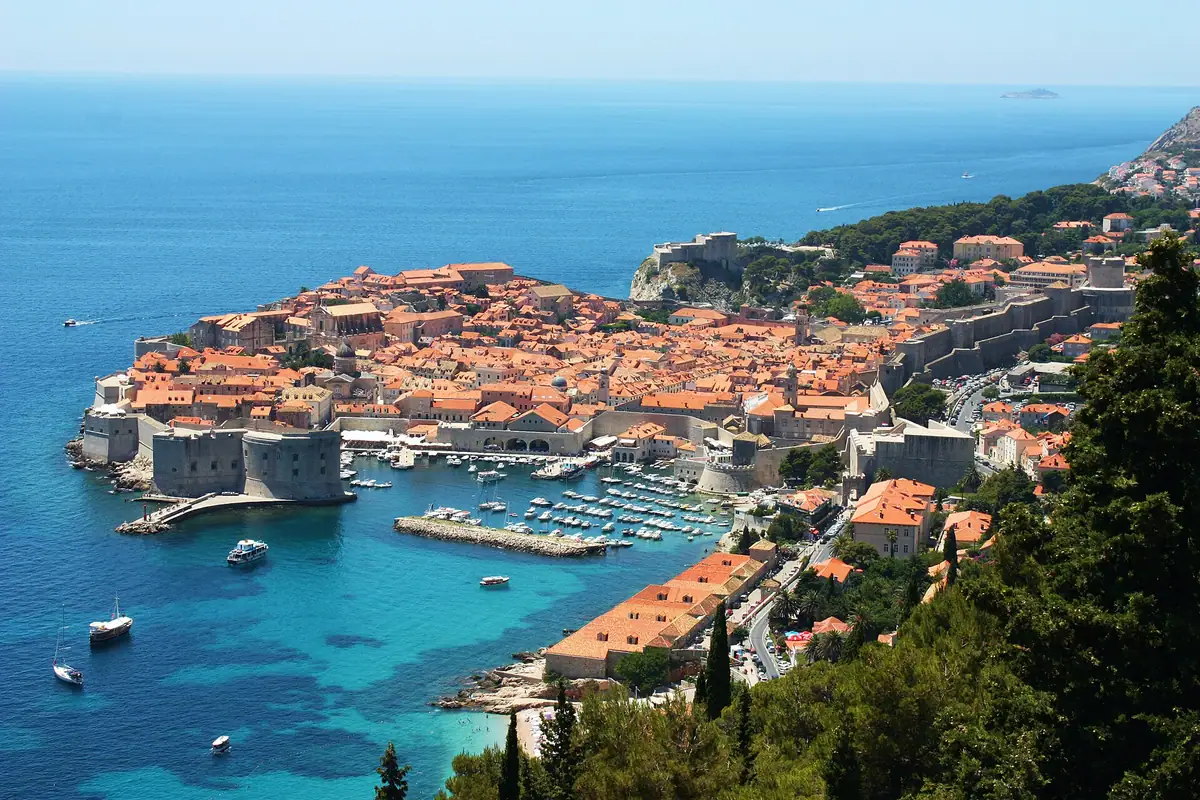
Photo: Bracodbk, CC BY-SA 3.0
Croatia is the easiest case we have. It is in the EU, it has been on the euro since 2023, and an eSIM there behaves exactly as it would at home — no registration, no paperwork, no shop.
How easy depends entirely on where you are coming from. If you fly in from within the EU, you may need nothing at all. If you drive down from Serbia, Bosnia or Montenegro, Croatia is full-price foreign roaming — and the coastal road has a geography trap that catches people every single summer.
Which networks you get
Our plans use A1, Hrvatski Telekom and Tele2. Your phone takes whichever is strongest where you are and switches on its own as you drive.
In Zagreb and along the motorway you will never notice. On the coast you will. Coverage there is not measured in towns but in bays: strong in the village, weaker behind the ridge, and gone in the cove you reached down a gravel track. On the islands the difference between networks shows most clearly — one holds, another does not, and which is which depends on exactly where you are standing.
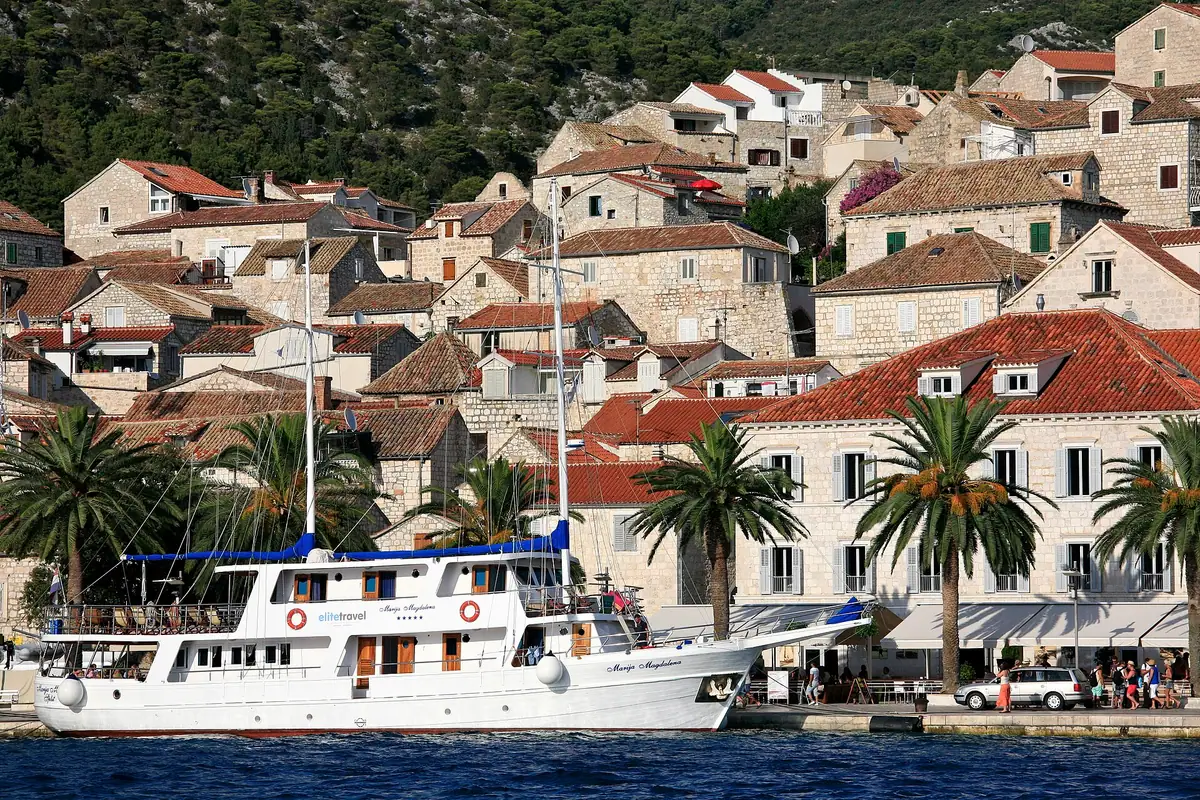
Neum, and why your bill wakes up near Ston
This is the one real trap on a Croatian trip, and geography makes it by itself.
The road from Split to Dubrovnik passes through Neum, which is Bosnia and Herzegovina. The stretch is short — about ten kilometres — but long enough for your phone to register on a Bosnian network. A plan bought for Croatia does not cover it. An EU plan does not cover it either, because Bosnia is not in the EU.
Your phone does not ask whether you meant to cross a border. It takes the strongest signal, and for those ten kilometres the strongest signal is Bosnian.
The same thing happens anywhere close to a frontier: a phone will happily grab a network on the other side while you are still firmly on this one. Along the Croatian border it is most common at Neum, under the Dinara range, and in the east.
What to do: heading for Dubrovnik, either switch data off for that half hour, or carry a plan that also covers Bosnia. Since 2022 the Pelješac bridge bypasses Neum entirely — if you take it, the question does not arise.
If you are coming from outside the EU
Then none of the EU's roaming rules apply to you. Your home plan in Croatia is foreign roaming at full price, and the regional Western Balkans roaming agreements cover the countries of the region — not Croatia, which left that framework when it joined the union.
In practice the bill does not creep, it jumps, and usually not from what you expect. Maps and messaging are pennies. Photos uploading themselves to a cloud are what turns into a story you tell afterwards.
If you are coming from the EU
Then you may need nothing, and we would rather say so than sell you something you will not use. Check two things:
- Your fair-use cap. Operators may limit roaming data, and the limit is often a small fraction of your home allowance. Unlimited at home is rarely unlimited in Croatia.
- What happens past the cap. Some slow you down; others charge per megabyte.
How much data a coast holiday eats
Less than you think, with one exception.
A week on the Adriatic — maps, messaging, checking ferry times, a few calls, sending photos — fits comfortably in 3 to 5 GB. But:
- Photos and video backing themselves up can be more than everything else combined. Set backup to WiFi only before you leave. This single setting saves more than any other choice you make.
- Video calls are fine occasionally and expensive as a habit.
- Navigating without a downloaded map. Save Dalmatia offline before you go; it costs once instead of every day.
Ferries and islands
Croatian ferries are shorter than Greek ones and mostly run close to land, so the signal rarely disappears altogether — though it does thin out mid-channel. For Hvar, Brač and Korčula that is a few minutes, not an hour. For Vis and Lastovo it is longer.
Worth doing anyway: download your ticket and an offline map of the island. Jadrolinija's timetable changes for the summer season, and a saved copy beats hunting for it in a port.
Setting it up before you go
An eSIM installs over the internet, which means while you still have internet. Do it at home, the day before.
- Install on WiFi and leave the new line switched off.
- Leave data roaming off until you arrive. A plan counts from its first connection to a network, not from payment.
- Once across the border, turn the travel line on and switch data roaming on for that line only.
- Keep your own number on for calls, with its data roaming off. You stay reachable and nothing can quietly bill you.
If you are driving, do this at the last service station before the border rather than in the queue at it.
Mistakes worth avoiding
- Turning everything on at the crossing. Your home line grabs a Croatian network and the meter starts before the barrier lifts.
- Forgetting Neum. Ten kilometres, clearly visible on the bill.
- Relying on apartment WiFi. Sometimes excellent; in August, shared with ten other apartments, frequently not.
- Buying the smallest plan for a fortnight and then topping up from a beach with no signal.
Short answers
Will it work the moment I cross? Yes, if it was installed beforehand. The line registers within a minute or two of switching data roaming on.
Do I get a Croatian number? No. The eSIM carries data; your own number stays yours and receives calls and messages without roaming switched on.
Does it cover Istria, Dalmatia and the islands? Yes — all Croatia, all served by the same networks.
And Neum? Neum is Bosnia and needs a plan that covers Bosnia. The Pelješac bridge avoids it.
Can I tether? Yes — the cheapest way to get a laptop or tablet online.